Woodchuck
Marmota monax
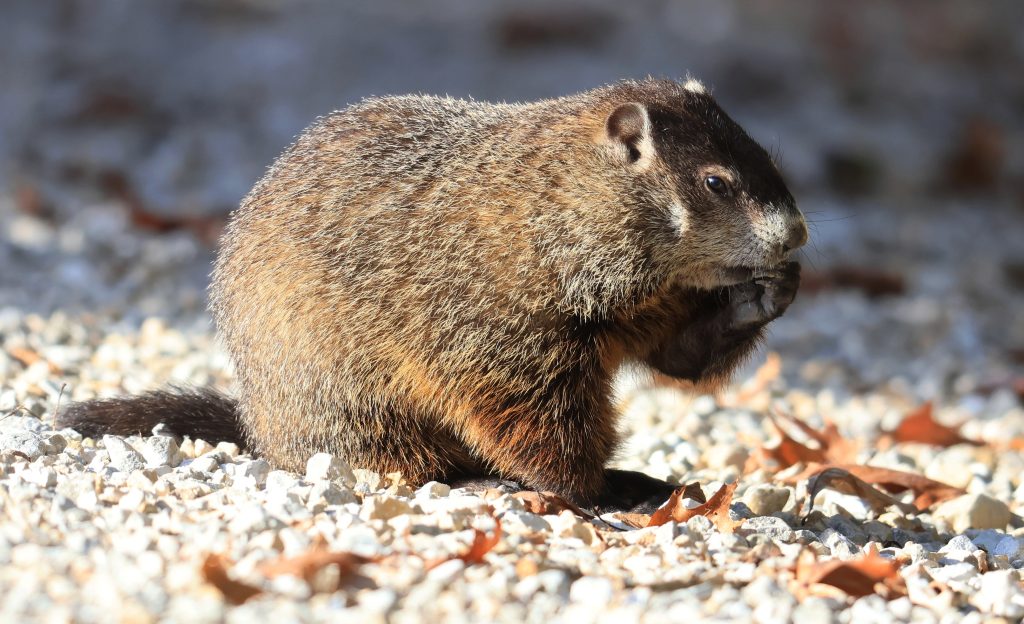
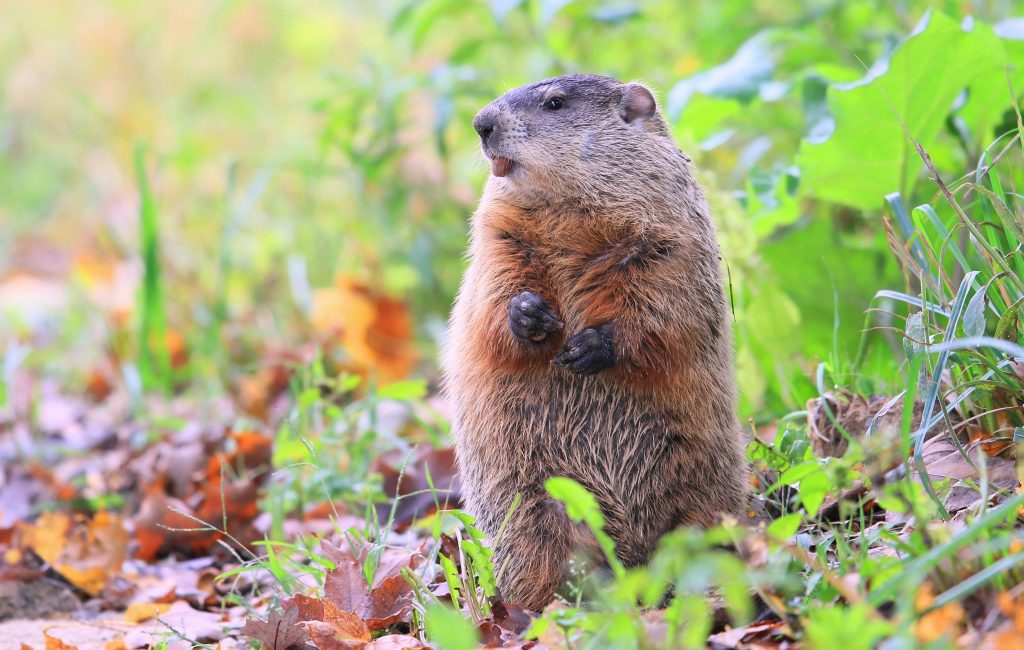
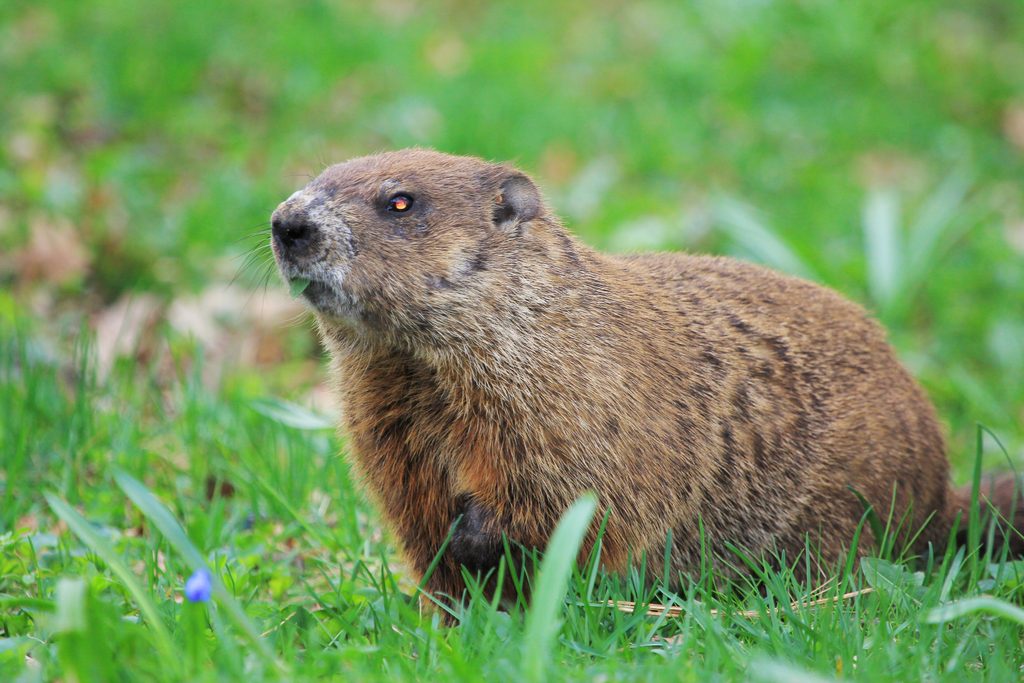
Photographs by Larry Reis
Woodchucks are the furry little construction workers of the animal kingdom. They are known by several different names: woodchuck, groundhog, and whistle-pig. The name “whistle-pig” comes from their high-pitched warning whistles.
A woodchuck’s burrow can have multiple entrances, long tunnels, nesting chambers, and even a designated bathroom chamber. Some burrows extend dozens of feet underground, with multiple levels and escape routes.
Woodchucks are true hibernators. During winter, their body temperature, heart rate, and breathing rate drop dramatically, falling from around 80 beats per minute to just a few beats per minute during deep hibernation.
Like other rodents, woodchucks have incisors that continuously grow throughout their lives. Chewing helps wear them down. Their teeth are designed for gnawing vegetation, and often have a distinctive orange-yellow color because of the enamel.
Despite their round bodies and short-looking legs, woodchucks can climb trees and swim when necessary.
Woodchucks mostly eat plants, including grasses, clover, leaves, flowers, and garden vegetables. They may happily raid a vegetable garden, eating beans, peas, lettuce, and other tasty crops.
Female woodchucks usually give birth in spring, often producing a litter of roughly 3–6 babies, called kits. The young stay in the burrow at first and gradually venture out as they grow.
Woodchucks aren’t pigs, and they don’t chuck dirt, not wood. They’re large ground squirrels with serious digging skills and an impressive winter survival strategy.